Does Your Lawn Need to be Dethatched?
Suspect your lawn may need to be dethatched? Before you proceed you should know that not every lawn requires power raking or “dethatching”. However, whenever thatch has built up in the lawn you should strongly consider it. Thatch is harmful to your turf and there comes a point when getting rid of that thatch becomes essential for your yard’s health. Here is some important information to consider if you are thinking about having your lawn dethatched.
When to Dethatch Your Lawn in Omaha, NE
Before you do anything, you should check to see how thick your lawn’s thatch layer is. You can do this by taking a spade or a garden trowel and digging out a small wedge from the soil. You can then get an idea of just how much thatch is present. If the layer of thatch exceeds 1 inch, then it is time to consider dethatching your lawn or hiring a professional dethatching service to take care of it for you. You may have already noticed the signs before testing such as weak growth and dull grass color.
Keep in mind, lawn services such as aerating, overseeding, and dethatching in Nebraska should be done during the cooler seasons which means the turf is in peak growing season. In Omaha, where Kentucky bluegrass is the most prominent grass type this usually means in the Spring or Fall. You want to do it during this time of the year because active grass growth is necessary for the instant and speedy recovery of the lawn.
One essential thing to keep in mind is that you should never dethatch your lawn when it is under stress or dormant which lawns usually are here in the middle of Summer. The process of dethatching a lawn at this time can cause damage to your yard which can take months or even years to recover.
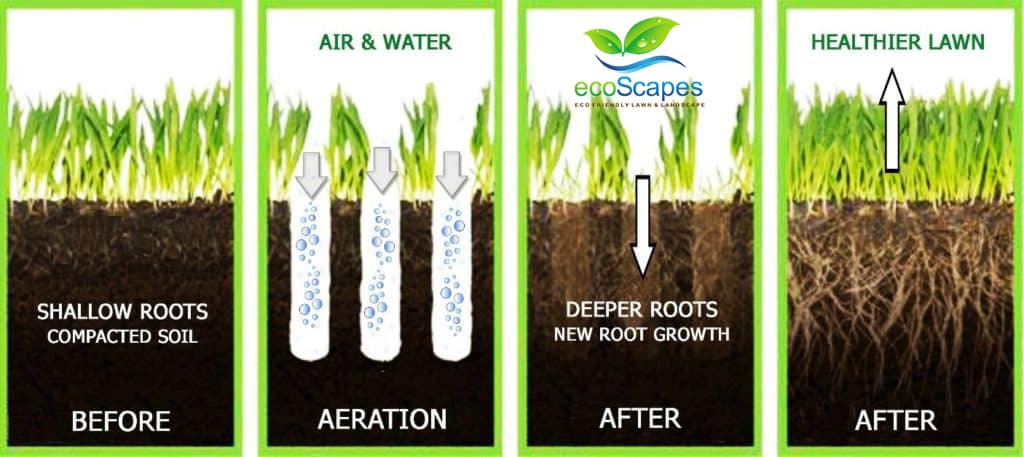
Customers sometimes confuse the difference between dethatching their lawn and having it aerated. It is important to keep in mind that these are two completely different processes, and each serves its own purpose in the overall health of your lawn. Lawn aeration removes 3-4” plugs from the soil that does include the thatch layer, but these cores are only pulled sporadically throughout the yard. There are many benefits of lawn aeration, but it is not the best option for removing thatch. Performing the two services in tandem will yield the best result as aerating loosens up compacted soil and turf, therefore, helping to prepare the lawn for dethatching. This also helps speed up the breakdown of existing thatch. Learn more about.

How to Dethatch Your Lawn
When it comes to removing the thatch from your lawn, we usually recommend calling a professional lawn service because of the backbreaking labor and expensive equipment that is required. Excessive thatch can require more than one dethatching because attempting to remove it all at once can result in damage to the grass.
Here are the three common ways of dethatching a lawn.
- Manual Dethatching: You can purchase dethatching rakes which are short tined rakes that are specifically designed to dig deep into your turf and pull out the thatch. This is a cheap option when there is only light thatch but be prepared, it is hard work.
- Power Rakes: Power rakes are the next step up and by far the most common piece of equipment used. Power rakes are more like lawn mowers that have rotating rake-like tines that go deep into the turf and pull out the thatch. Before using a power rake, you will want to make sure that your lawn is healthy enough to recover.
- Vertical Mowers: These are also known as verticutters as they have vertical blades that go deep into the soil and pull out the thatch. These are usually only used when thatch layers are extremely thick. Vertical mowers are ideal for lawns that are in need of renovation as you can adjust the blades depth and pull up most of the top layer of nutrient deprived soil as well.
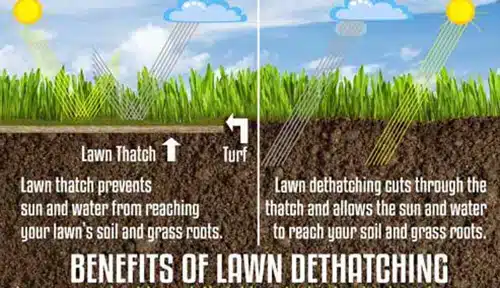
Professional Lawn Dethatching Service
Dethatching is a job that no one looks forward to, but it is a necessary chore for a healthy vibrant lawn. It also usually requires expensive equipment that most homeowners don’t just have lying around. Of course, there is always the manual raking option, but come on, who has the time or desire to be out raking their lawn all day. If you think your lawn may need to be power raked, aerated, or even both, give us a call and we’ll be happy to take a look and provide you with recommendations and provide you with a free estimate.